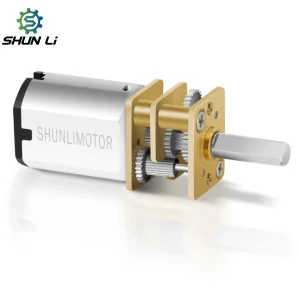
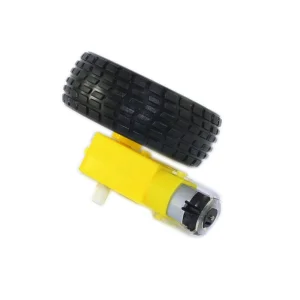
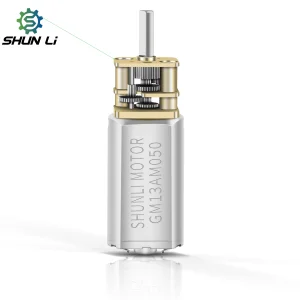
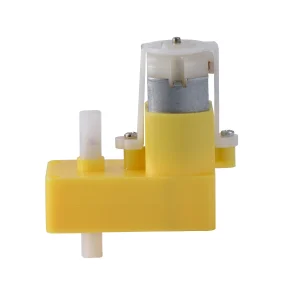
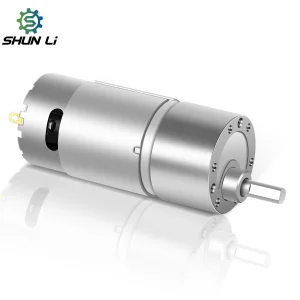
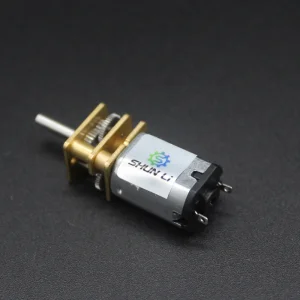
Explore our engineering line of high-torque, mini reduction gearboxes tailored for commercial and demanding industrial layouts.
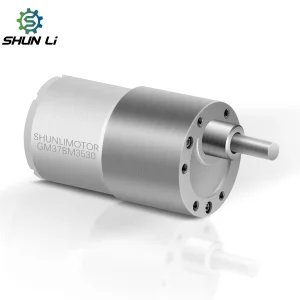
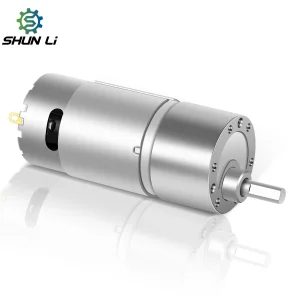
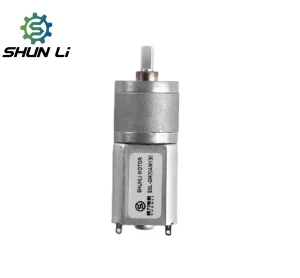
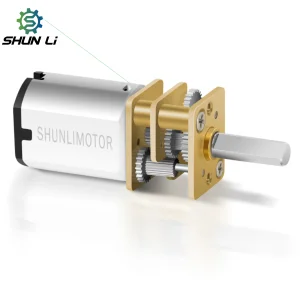
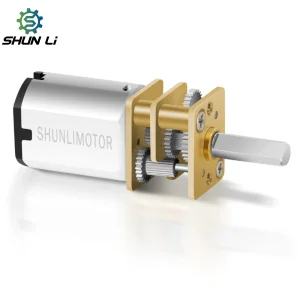
Providing high-torque, industrial-grade micro drives that guarantee zero downtime for global engineering networks.
MicroDyn Motor is a specialized High-Tech China factory established in 2006, dedicated to engineering advanced Micro DC, Gear, and Brushless (BLDC) motors. Over the past decades, we have evolved from a local manufacturing workshop into a leading developer of customizable micro-rotation systems.
The heart of every great machine is its MicroDyn Motor. If the motor fails, innovation stops. That is why we engineer every drive with industrial-grade margins—ensuring higher torque, lower noise, and longer operational lifespans than standard commercial alternatives.
We bridge the gap between design and volume. Through 100% custom engineering (modifying shafts, voltages, encoders, and gear ratios) and scalable automated production, we supply global OEMs with the exact motion control they need, delivered direct from our ISO-certified facilities.
The global demand for micro DC gear motors has experienced an unprecedented surge, driven by the acceleration of Industry 4.0, IoT integration, and the rise of smart physical applications. As modern systems require more power in smaller profiles, miniature gear motors have transitioned from basic mechanical components to smart, highly-integrated modules.
In highly automated environments, efficiency and power density are the key metrics. Traditional large-scale motor setups are being replaced by distributed micro-drives. This shift allows engineers to build modular automation systems, medical pumps, smart locks, and automotive actuation components. Consequently, selecting a reliable manufacturer that offers custom engineering and consistent quality is critical for OEMs looking to maintain a competitive edge.
1. Automation Scaling: AGVs, robotic joints, and conveyor diverters require localized, lightweight drive modules.
2. High-Efficiency Standards: Regulatory standards mandate stricter control over power loss, boosting brushless and optimized gear design usage.
3. Miniaturization: Modern medical and aerospace electronics demand micro motors under 20mm in diameter, with integrated gearheads.
Evaluating design parameters between different motor topologies, commutation methods, and gearbox configurations.
To design an efficient drive system, engineers must understand the mechanical trade-offs of different gearboxes and commutation systems. The table below outlines how common configurations perform across key design metrics:
| Motor & Gearbox Configuration | Primary Advantage | Efficiency Range | Acoustic Profile | Typical Lifetime |
|---|---|---|---|---|
| Brushed DC + Spur Gearbox | Cost-effective, high starting torque | 45% - 65% | Moderate (50-60 dB) | 1,000 - 3,000 Hours |
| Brushless DC + Planetary Gearbox | High density, long lifespan, precise control | 75% - 90% | Very Low (<40 dB) | 10,000+ Hours |
| Coreless DC + Micro Planetary Gearbox | Ultra-fast dynamic response, zero cogging | 80% - 92% | Low (<45 dB) | 5,000 - 8,000 Hours |
| Stepper Motor + Worm Gearbox | Self-locking, excellent holding torque | 30% - 50% | Moderate (55-65 dB) | 5,000+ Hours |
The choice of material for gear wheels directly impacts load capacities and acoustic signatures:
Every motor we produce is run-in and tested before leaving the factory floor to ensure maximum field reliability.
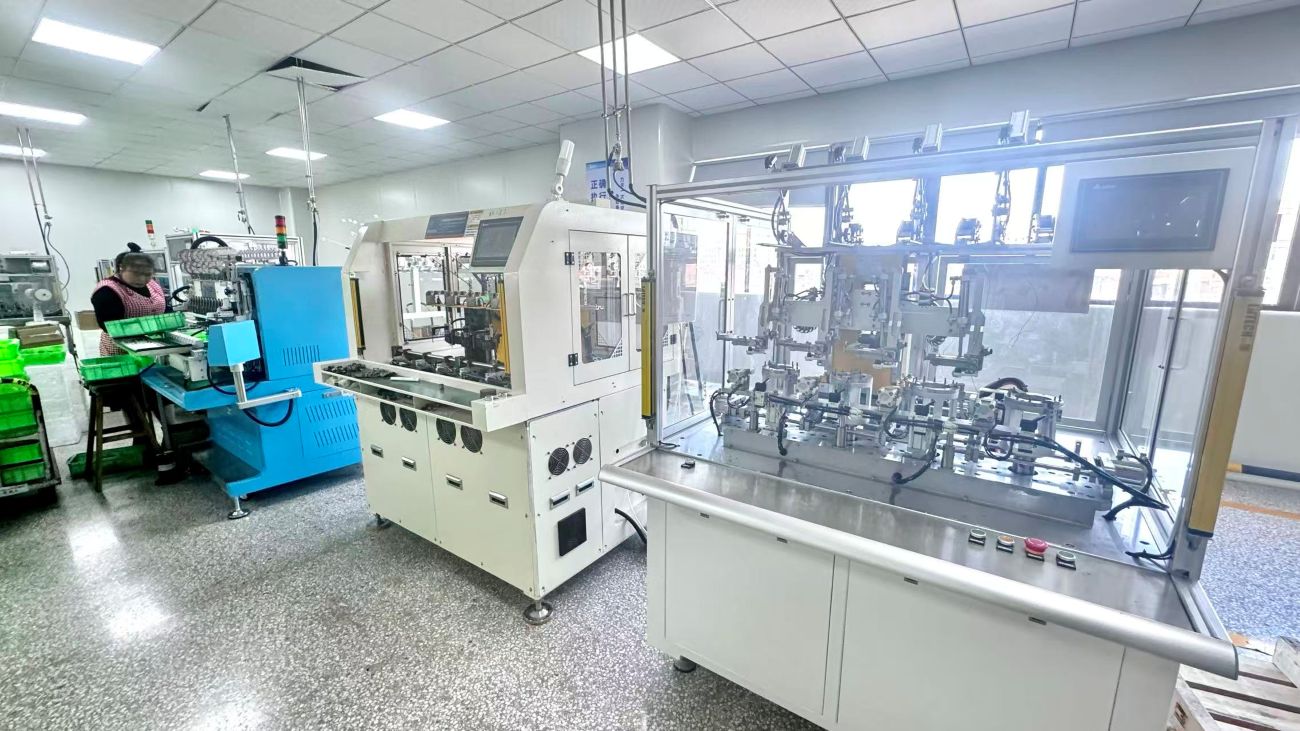
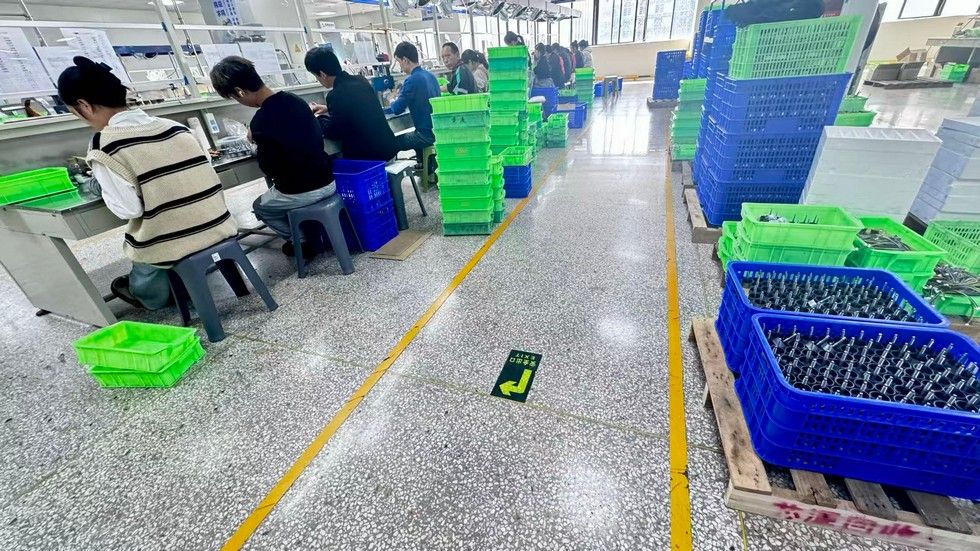
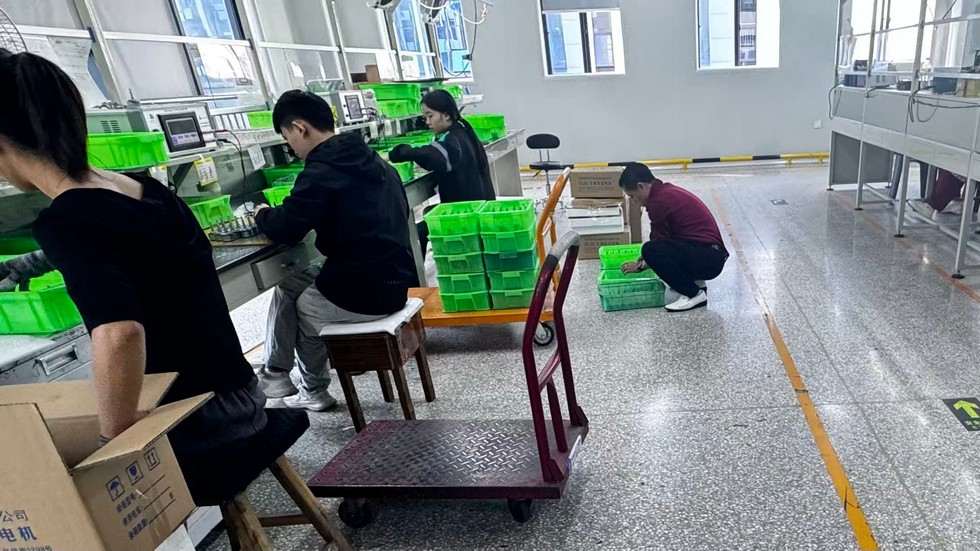

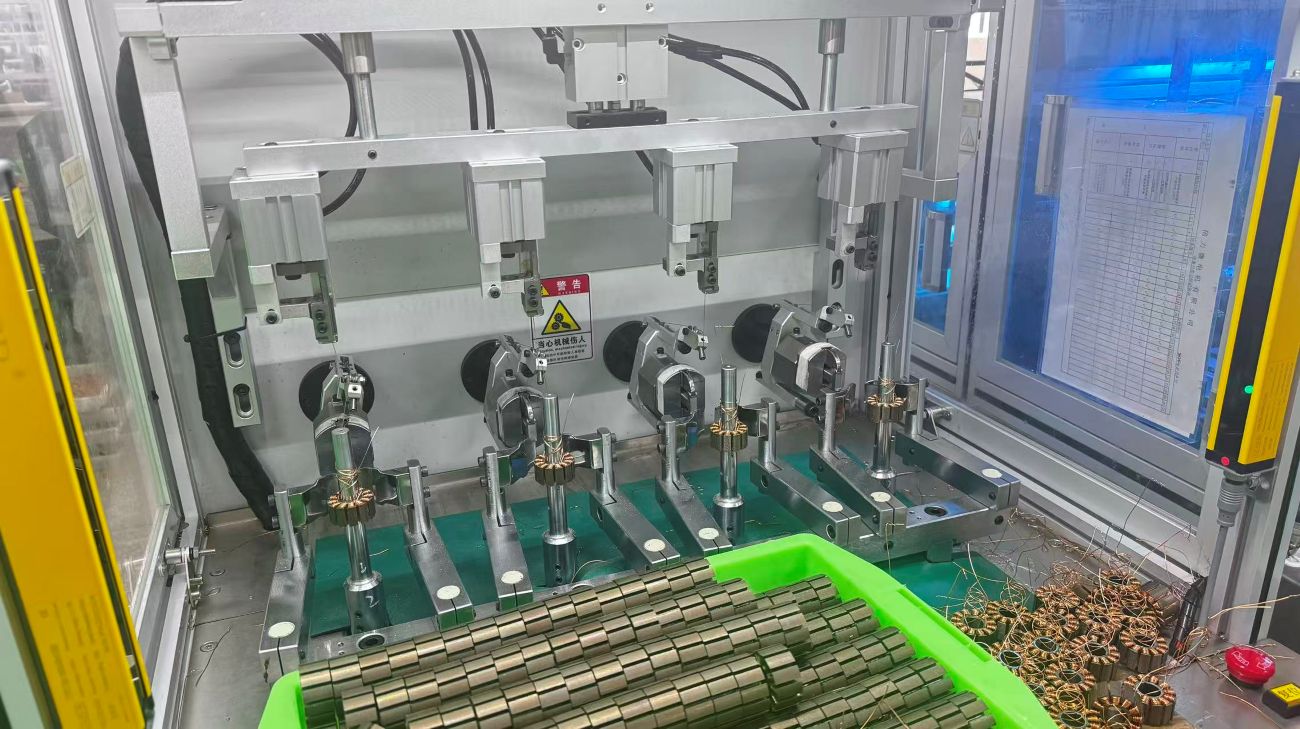
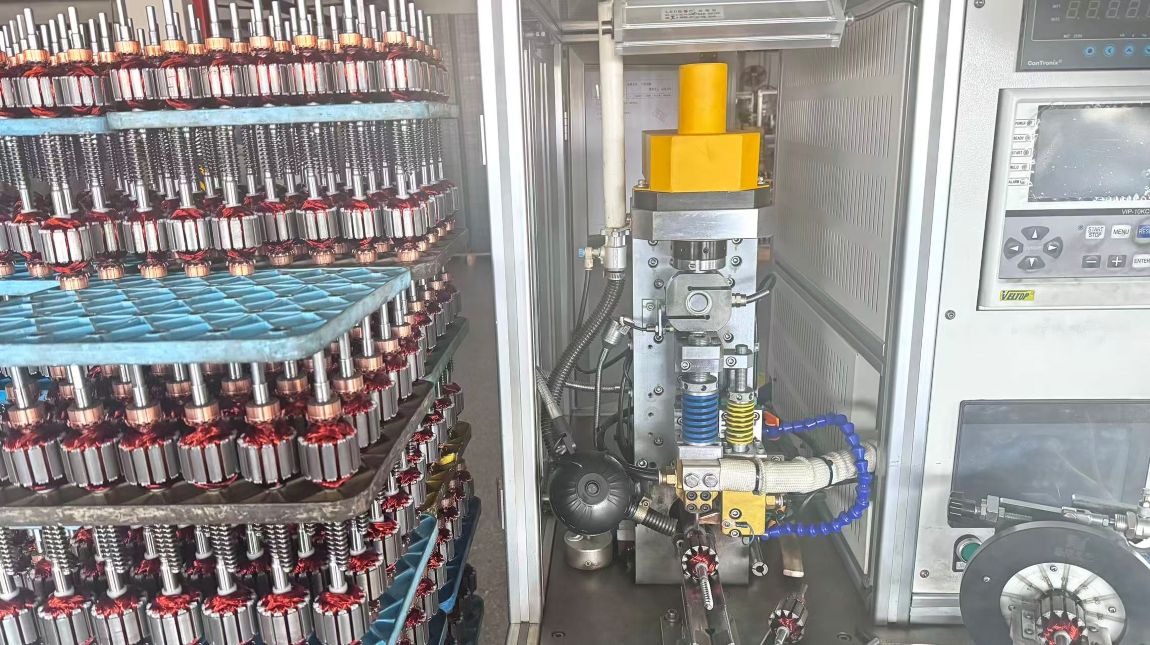
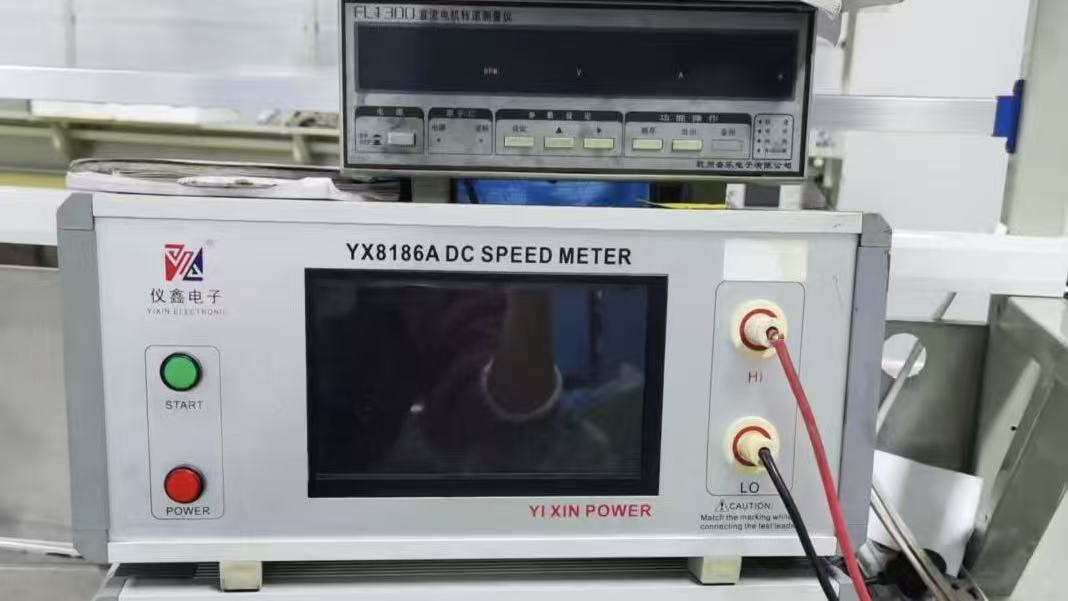
Sub-assembly structural spot welding station
How we modify drive characteristics to fit distinct industrial conditions and regulatory demands.
Micro-drives must operate quietly and efficiently. Smart door locks, home vacuum cleaners, and motorized blinds require high torque in compact packages. Using low-noise carbon brushes or brushless motors coupled with polymer planetary gearboxes ensures these systems operate quietly and reliably.
Medical devices require extremely reliable drive systems. Components like surgical instruments, peristaltic pumps, and rehabilitation equipment demand predictable speeds, low heat output, and clean materials. We offer coreless motor options with zero cogging torque to ensure smooth and precise movement.
Automatic sliding gates, security barriers, and ticket dispensers face harsh outdoor conditions. These applications need high torque, weather resistance, and robust mechanical structures. By using hardened carbon steel gears and IP-rated housings, our motors provide long-term reliability under continuous operation.
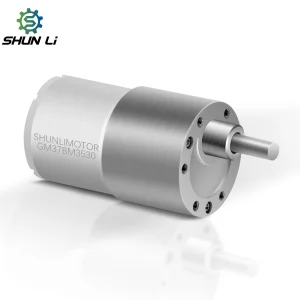
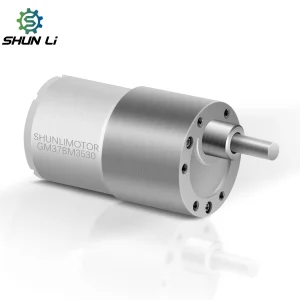
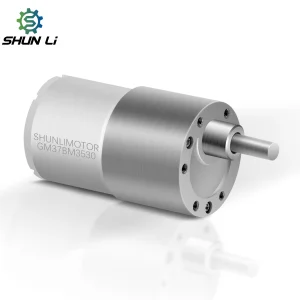
Commercial beverage equipment must operate consistently to prevent downtime. These applications need high starting torque to grind or dispense ingredients, along with stable rotational speeds. Our 37mm gearbox series is designed to handle high loads and keep machines running smoothly.
Common questions from design engineers regarding performance limits, lifespan, and customization parameters.
Spur Gearboxes are simple, cost-effective, and quiet at low loads. They are ideal for applications where cost is a primary factor and space is relatively open. Planetary Gearboxes share the load across multiple gears, allowing them to handle significantly higher torque in a more compact size. They also have less backlash but are typically more expensive and complex.
Selection begins with your output target: required torque (Nm or Ncm) and speed (RPM). Based on these values, calculate the output power. Working backward through the efficiency loss of the gearbox helps determine the required raw motor input. You must also consider radial and axial loads on the output shaft to prevent premature wear.
Yes. We offer both magnetic and optical encoders for our entire motor lineup, including the N20 and 37mm series. These encoders provide feedback on speed, direction, and position, which is essential for precise control in applications like robotics and smart locks.
For custom engineering prototypes, we can adjust shaft dimensions, voltage windings, and cable terminations. For full production runs, we can also customize gear ratios, casing materials, and lubrication options to meet specific performance and environmental needs.
Extreme temperatures can thin or thicken gear lubricants, altering torque output and motor efficiency. Standard units operate between -10°C and +60°C. For extreme environments, we can specify low-temperature greases or high-temp winding insulation (Class H) to prevent performance drops.
High-torque configurations, brushless options, and integrated encoders for industrial applications.
 MicroDyn Motor